 EN
 AR
 BG
 HR
 DA
 NL
 FR
 DE
 EL
 HI
 IT
 JA
 KO
 PT
 RU
 ES
 SV
 TL
 ID
 SR
 SK
 UK
 VI
 ET
 HU
 TH
 TR
 MS
 GA
 BE
 HY
 KA
 LO
 LA
 MN
 NE
 SO
 MY
 KK
 UZ
Large Scale 3D Printing: One-Piece Printing vs. Multiple-Part Assembly
Large-scale 3D printing makes it possible to produce oversized parts, industrial components, furniture, automotive models, and custom structures. However, when printing large objects, one important question often comes up: Should you print the entire model in one piece or split it into multiple parts for assembly?
Both methods have their advantages. The right choice depends on the printer's build volume, part size, material, design, and final application.
In this article, we'll compare one-piece 3D printing and multiple-part assembly to help you choose the best method for your project.
1. One-Piece 3D Printing: Fewer Connections, Better Overall Strength
One-piece 3D printing means producing an entire model in a single print job without dividing it into separate sections.
This method is especially useful for large functional parts, industrial prototypes, automotive components, and products that require a clean, continuous structure.
Key Advantages:
Better structural integrity: Fewer joints and connection points can reduce potential weak areas.
Less assembly work: No need to spend extra time joining multiple printed sections.
Cleaner appearance: A continuous surface makes post-processing and finishing easier in many applications.
Simpler production: Fewer assembly steps can help reduce labor and improve production efficiency.
However, one-piece printing also has limitations. Large models require a 3D printer with a sufficiently large build volume. Long print times, material consumption, and the risk of print failure should also be considered.
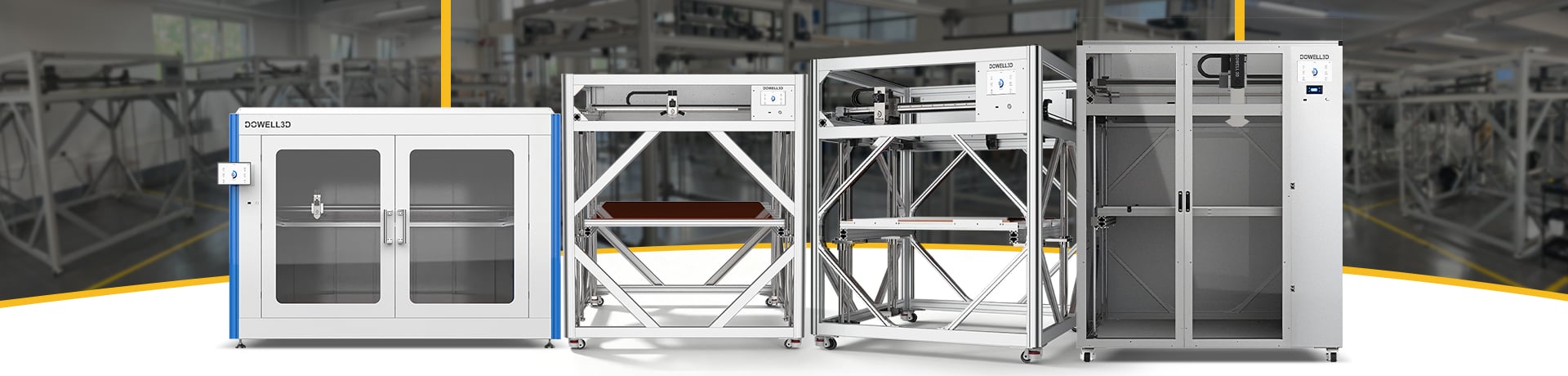
For manufacturers producing oversized parts, a large-format FDM or FGF 3D printer can make one-piece production more practical.
2. Multiple-Part 3D Printing: More Flexibility for Large Projects
Multiple-part assembly involves dividing a large 3D model into smaller sections, printing each section separately, and joining them after printing.
This approach is widely used for large sculptures, automotive body parts, architectural models, and oversized prototypes.
Key Advantages:
Flexible printing size: Each section can fit within a smaller build volume.
Lower printing risk: A problem with one section does not necessarily affect the entire model.
Easier transportation: Smaller parts are easier to pack, move, and ship.
Simpler maintenance: Individual sections can be replaced or reprinted when needed.
However, multiple-part printing requires additional work. Parts need accurate alignment, strong connections, and proper surface finishing. Visible seams may also affect the final appearance.
Common joining methods include mechanical fasteners, adhesive bonding, and specially designed interlocking structures.
3. One-Piece Printing vs. Multiple-Part Assembly: Key Differences
| Comparison | One-Piece Printing | Multiple-Part Assembly |
| Structural strength | Fewer joint-related weak points | Depends on connection design |
| Production process | Print in one job | Print and assemble separately |
| Surface finish | Fewer visible seams | May require seam finishing |
| Printer requirements | Large build volume | More flexible build size |
| Transportation | More difficult for oversized parts | Easier to transport |
| Production risk | One failure may affect the whole print | Individual sections can be reprinted |
| Post-processing | Usually fewer joining steps | Requires assembly and finishing |
Neither method is always better. The best option depends on the product's size, strength requirements, production costs, and intended use.
4. How to Choose the Right Method for Large-Scale 3D Printing
Before choosing a printing method, consider these four factors:
1. Part Size and Printer Build Volume
If your model fits within the printer's build volume, one-piece printing is often worth considering. For extremely large models, splitting the design into sections may be more practical.
2. Strength and Functionality
For functional industrial parts that need reliable connections and consistent performance, one-piece printing can be a good choice. If multiple parts are necessary, proper joint design is essential.
3. Printing Time and Production Cost
One-piece printing reduces assembly work but may involve longer print times and greater material investment in a single job. Multiple-part printing offers more flexibility but adds assembly and finishing costs.
4. Final Appearance and Application
For decorative sculptures, large displays, and automotive models, both methods can deliver excellent results. The final surface quality depends heavily on printing settings and post-processing.
Conclusion
One-piece 3D printing offers fewer joints, less assembly work, and a more continuous structure. Multiple-part assembly provides greater flexibility, easier transportation, and lower risk when printing extremely large models.
There is no single solution for every project. The best approach depends on part size, strength requirements, production costs, and the capabilities of your 3D printer.
With the right large-format FDM or FGF 3D printer, manufacturers can produce large, high-quality parts more efficiently and choose the most suitable production method for each application.
Looking for a large-scale 3D printing solution? Explore DOWELL3D industrial FDM and FGF 3D printers to find the right equipment for your production needs.