
 EN
EN
 AR
AR
 BG
BG
 HR
HR
 DA
DA
 NL
NL
 FR
FR
 DE
DE
 EL
EL
 HI
HI
 IT
IT
 JA
JA
 KO
KO
 PT
PT
 RU
RU
 ES
ES
 SV
SV
 TL
TL
 ID
ID
 SR
SR
 SK
SK
 UK
UK
 VI
VI
 ET
ET
 HU
HU
 TH
TH
 TR
TR
 MS
MS
 GA
GA
 BE
BE
 HY
HY
 KA
KA
 LO
LO
 LA
LA
 MN
MN
 NE
NE
 SO
SO
 MY
MY
 KK
KK
 UZ
UZ
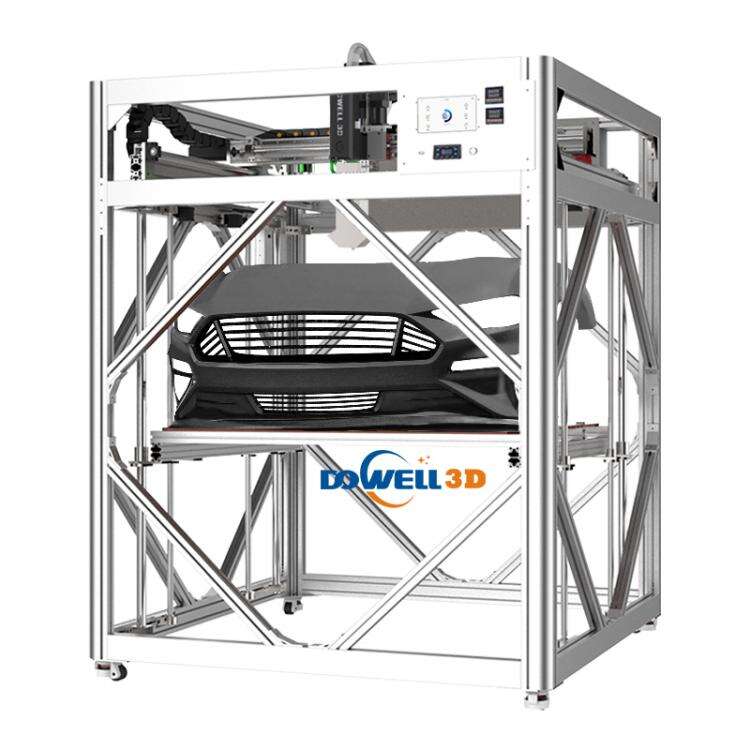
The automotive industry is continuously evolving due to the requirements of innovation, customization and increased to market time. In this cut-throat world, companies are resorting to the use of new technologies to automate and acquire competitive advantage. In Luoyang Dowell Electronics Technology Co, Ltd. we understand that Fused Deposition Modeling (FDM) 3D printing has come out as a revolutionary technology, which essentially boosts the accuracy and efficiency of automotive components manufacturing.
FDM Technology Strategy Advantage in the Automotive Industry
FDM 3D printing has a distinct range of advantages that are highly beneficial regarding the requirements of automotive production nowadays. FDM is an additive, unlike traditional subtractive technologies, where the components are fabricated in layers using durable materials of engineering grade. This method is characterized by unrestricted liberty in terms of design. The auto engineers are now able to come up with intricate geometries, built-in structures, and light weight structures which they were not able to offer or could not afford to produce many years back. In the case of our company, which considers the strong and efficient manufacturing solutions, this will imply giving our clients in the automotive industry the freedom to be innovative without limitations as they streamline the performance of their parts to the design phase on the digital platform.
Unparalleled Accuracy of the critical components
Accuracy is no bargain in the automotive industry, and tolerances can be extremely small, and performance of the parts is a matter of safety and functionality. Contemporary FDM systems are characterized by high dimensional precision and re-producibility. The capability is essential in the production of jigs, fixtures, and assembly guides that bring a perfect fit in the production line and hence reduce human error. Moreover, FDM is being popularly used in production of end-use components in non-critical applications, functional prototypes in tough tests and tailor-made tooling. The capability of designing and developing designs faster with the need to create highly precise parts at demand speeds up the validation process and makes the final component as per the toughest specification before the large-scale manufacturing process begins.
Improving the process of Production to the utmost
The most interesting argument in favor of applying FDM 3D printing to the automotive processes is efficiency gains. The technology radically reduces the design-to-physical part time. Prototyping and tooling that once took weeks, is now being done in days or at most in hours. This is made possible through agility and allows one to design and solve problems faster, as well as react to the development pipeline more efficiently. Moreover, FDM also helps in digital inventory whereby a part may be printed on demand, without the cost or logistics of holding physical spare parts, particularly with older vehicles, or in small volume production batches. This on-demand system reduces downtime and has huge logistical and economical benefit.
The Future of the auto manufacturing is additive
With the further development of FDM materials, which provide an increased level of heat resistance, strength and environmental stability, the range of printable automotive applications expands. The potential is enormous, whether it is custom interior parts and ductwork, or under-the-hood prototypes and final parts of low-volume specialty cars. Luoyang Dowell Electronics Technology Co, Ltd. has the dedication to offer the high-tech manufacturing technologies that will make this future come. With the FDM 3D printing, the automotive manufacturers are not only engaging with a new tool; they are engaging with a philosophy of production that will be more agile, innovative, and efficient that will shape the future of automotive excellence.