
 EN
EN
 AR
AR
 BG
BG
 HR
HR
 DA
DA
 NL
NL
 FR
FR
 DE
DE
 EL
EL
 HI
HI
 IT
IT
 JA
JA
 KO
KO
 PT
PT
 RU
RU
 ES
ES
 SV
SV
 TL
TL
 ID
ID
 SR
SR
 SK
SK
 UK
UK
 VI
VI
 ET
ET
 HU
HU
 TH
TH
 TR
TR
 MS
MS
 GA
GA
 BE
BE
 HY
HY
 KA
KA
 LO
LO
 LA
LA
 MN
MN
 NE
NE
 SO
SO
 MY
MY
 KK
KK
 UZ
UZ
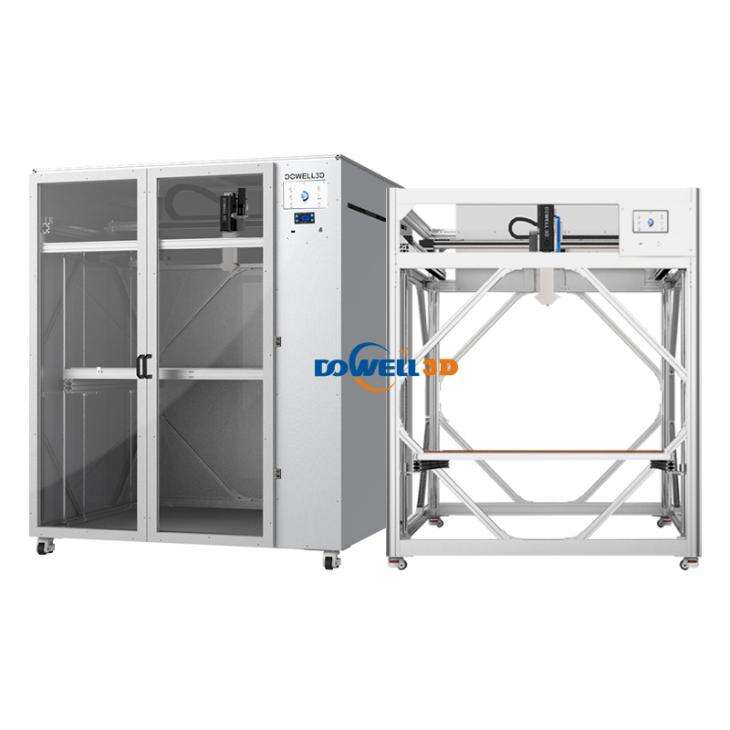
Demanding more agility, more resilience, and cost-effectiveness are the characteristics of the modern manufacturing environment. Logistical delays, inventory costs, and tooling dependency are issues to traditional supply chains which are usually linear and geographically dispersed. We understand that at Luoyang Dowell Electronics Technology Co, Ltd., innovation in the production technology will be the main determinant in defeating these hurdles. The large-format 3D printing integration is a disruptive one, and it essentially leads to more efficient supply chain and the ability of the business to create a more responsive and robust manufacturing process.
Lessening Dependency on Multifaceted Logistics and Tooling
The traditional manufacturing process usually involves several specialised vendors, long distance delivery of components, and costly custom moulds or fittings. This forms a network of dependencies that can easily be broken. When large 3D printers are introduced and used, this model is disrupted by the ability to produce large components, end-use parts, and large tooling on the factory floor or at a strategic local center on demand. With the computerization of the parts and tools inventory, companies can switch the supply system tradition based on just-in-case stocking into just-in-time digital warehouse. This significantly reduces warehousing cost, lowers shipping emission, and cost, and removes lead times of the traditional tooling purchase. The capability of manufacturing what is required, when and where it is required, makes supply chain a lot easier.
Increasing Time-to-Market and Design Speed
Speed is the key in today successful competitive environment. Design-to-production cycle may be a long process, which includes prototype, testing, and development of tools. Massive additive manufacturing shortens this agenda. Sizing Design iterations Design iterations on large components can be run quickly and did not require retooling so that their validation and product optimization can be done faster. In addition, it makes it easier to consolidate assemblies into individual, printed components eliminating the necessity of sourcing parts, assembly lines, and the inspection of numerous parts. This speed enables companies to introduce products into the market more quickly, react more quickly to customer reactions and make changes to design without devastating impacts on their supply chains, creating a culture of greater product innovation and responsiveness.
Enhancing Supply Chain Resilience and Customization
The impacts of weak, extended supply chains have become highlighted in the global events. Big 3D printing is a formidable means to de-risk operations. It allows the freedom to locally manufacture the essential components in case of a shortage or logistical blockade, and the business is not disrupted. This decentralization of the manufacturing capacity creates a resilience in nature. Furthermore, the technology is flourishing on customization without necessarily incurring the cost penalty of the traditional approaches. Economically viable production (of low volume, large scale or highly specialized parts) can be achieved, either in a bespoke industrial application, special tooling, or with limited-run products. This will enable manufacturers to add new value to the clients and penetrate the niche markets that used to be closed by the prohibitive set up costs.
Preparing the Groundwork to achieve Sustainable Manufacturing Practices
Efficiency does not only have to do with speed and cost but also, it involves resource efficiency. Sustainable supply chain Large 3D printers help to facilitate additive, not subtractive manufacturing. They construct objects in a layer and layer way, which save much material waste as opposed to machining of solid block. The digital aspect of the manufacturing also helps to achieve the lightest but stronger part design to save energy in the lifecycle of the end product (e.g. in the automotive industry or aerospace). The carbon footprint of the supply chain is minimized through localization of production and lowering of physical inventory and long-haul transportation.
In Luoyang Dowell Electronics Technology Co, Ltd., we believe in the delivery of innovative solutions that enable the manufacturing industry. The 3D printing in large format is not just a production tool, but a strategic asset to create a leaner, faster, and more flexible supply chain. Embracing this technology, manufacturers will be able to achieve new horizons of operational efficiencies, hedge themselves against volatility, and boldly enter a future where production will be digital agile and demand-driven, and localized.