
 EN
EN
 AR
AR
 BG
BG
 HR
HR
 DA
DA
 NL
NL
 FR
FR
 DE
DE
 EL
EL
 HI
HI
 IT
IT
 JA
JA
 KO
KO
 PT
PT
 RU
RU
 ES
ES
 SV
SV
 TL
TL
 ID
ID
 SR
SR
 SK
SK
 UK
UK
 VI
VI
 ET
ET
 HU
HU
 TH
TH
 TR
TR
 MS
MS
 GA
GA
 BE
BE
 HY
HY
 KA
KA
 LO
LO
 LA
LA
 MN
MN
 NE
NE
 SO
SO
 MY
MY
 KK
KK
 UZ
UZ
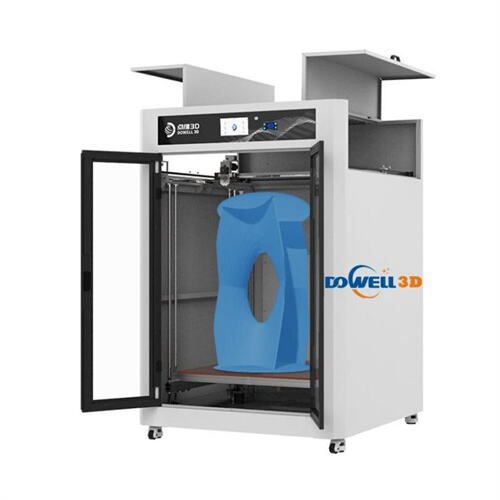
Industrial adoption of 3D-printing technology is speeding. But with so many products making the claim, what is really a 'large format 3D printer for production', the answer lies in some fundamental engineering principles that are based on much more than just physical size. It’s a system that wasn’t built for prototyping, but rather designed to produce tough, reliable and repeatable end-use parts in a scale that’s meaningful in industrial applications.
Solid Build and Structure
A large format printer for industry Structure: foundations any solid industrial grade format printer. A manufacturing machine need to have very high stability and rigidity. It starts with a heavy-duty frame that is often made from materials such as precision-machined aluminum or hardened steel. This stout build is also necessary to provide stability which significantly reduces vibration and ensures proper registration of the print head over the full massive build volume. Unlike smaller machines configured on a desktop, a proper industrial large-format printer simply can't allow skewed frame flex or resonance - these small missteps result in significant errors with your print, actual layer shifting and part failure, particularly through long uninterrupted 3D printing runs ranging into days. The rigidity makes sure the first layer of a print is as dimensionally accurate as the last, while the strength means the panels does not sponge, bend or flex under loads.
High Accuracy Motion Stages and Actuators
What does big build volume mean if you do not have the accuracy to use it? The motion system is the core of this accuracy. High end components like linear guides, precession ball screws and closed loop stepper motors are used in the industrial big format printers. Together, these mechanisms help to ensure that the extruder is capable of moving with high accuracy and repeatability in X, Y, and Z. Such a high degree of control means that artifacts such as ringing, ghosting etc. are removed when printing larger flat surfaces and ensures complex shapes closely match the original shape. The drive system must be strong enough to push and pull the massively heavy gantry and extruder arrangement without losing steps -so that the perfect detailed corner at one end of your build plate is duplicated exactly on the other.
Engineering Materials Advanced Extrusion System
Manufacturing materials require a broad set of advanced materials ranging from high strength composites such as carbon fiber to durable ABS, and heat-resistant and medical grade materials. A real manufacturing printer, however, should have an extrusion system that
can combat this problem. This includes a hot end that can get much hotter and stay that way than those needed to operate with typical PLA settings (DOWELL3D printer is equipped with a high-temperature nozzle capable of reaching up to 420℃, allowing for rapid melting of various printing materials), and also includes some of the smaller details like an extensive precision-machined extruder carriage, reinforced mounts for your filament spool, and a dual-drive connection between your filament feed source and the rest of this powerful machine’s mechanics. Also, an actively heated chamber is frequently a crucial differentiator. By running an elevated chamber temperature throughout the entire build, in both production and transportation markets, there is never a concern for part warping or delamination in large parts at an effective cost/quality ratio needed for achieving best-in-class layer-to-layer quality and material properties of high-performance engineering thermoplastics.
Integrated Software and Dependable Electronic Control
Hardware is only half of the equation. The brain is the soft- and firm-ware mainframe where it all comes together. A slicer, such as the professional-caliber one that’s often home-brewed to be perfectly tailored for a particular machine, are critical for efficiently and dependably handling large CAD files and producing error-free G-code. The printer's control board and electronics need to be industrial quality, based around heavy duty parts capable of running 24x7 without burning up. These include features such as power-loss recovery, thermal runaway protection and real-time monitoring. System Robustness is of the UTMOST importance to a manufacturer. The electronics and software need to ensure that a multi-day print completes every time, so you can’t lose out on the massive investment in both materials and time.
Lastly, safety and operational stability must be paramount in a factory floor printer. This includes: Enclosed/fitted print chambers High temperature safety interlocks and Fume filtration systems that work to protect the machine operator/make and manufacturing area. Consistency is the ultimate goal. Each part we manufacture, whether it be the first or the fiftieth, is produced to exacting standards. It is this repeatability that also turns a large format 3D printer from a curiosity into part of the production workflow, allowing businesses to print jigs, fixtures, tooling and even end-use parts when they are needed.
The design philosophy of Luoyang Dowell Electronics Technology Co., Ltd is based on these principles. We know that, when it comes to our customers, a large print volume 3D printer isn’t just about size – it’s about bringing a powerful manufacturing solution into every step of the production process.