
 EN
EN
 AR
AR
 BG
BG
 HR
HR
 DA
DA
 NL
NL
 FR
FR
 DE
DE
 EL
EL
 HI
HI
 IT
IT
 JA
JA
 KO
KO
 PT
PT
 RU
RU
 ES
ES
 SV
SV
 TL
TL
 ID
ID
 SR
SR
 SK
SK
 UK
UK
 VI
VI
 ET
ET
 HU
HU
 TH
TH
 TR
TR
 MS
MS
 GA
GA
 BE
BE
 HY
HY
 KA
KA
 LO
LO
 LA
LA
 MN
MN
 NE
NE
 SO
SO
 MY
MY
 KK
KK
 UZ
UZ
Why 3D Printer Parts Warp and How to Prevent It
Understanding Warping Problems in Large Format 3D Printing
Warping is one of the most common challenges faced by 3D printing users, especially when producing large models and functional parts.
You may start a print successfully, but after several hours, the corners begin lifting from the build plate, the layers separate, or the final dimensions become inaccurate. These problems can be frustrating, particularly when using a large format 3d printer for expensive prototypes or industrial components.
For users operating an industrial 3d printer, warping is not only a quality issue. It can lead to wasted materials, longer production cycles, and unexpected delays.
Understanding why parts warp and how to prevent it can help you achieve more reliable results with your 3d printer, especially for large-scale applications.
What Is 3D Printer Warping?
Warping happens when different areas of a printed part cool at different speeds.
During the printing process, each layer expands slightly when heated and contracts as it cools. If the temperature difference between the hot and cold areas becomes too large, the lower layers can shrink and pull away from the build surface.
This creates common warping symptoms:
Corners lifting from the build plate
Curved or uneven bottom edges
Layer separation
Incorrect part dimensions
Warping is especially common when printing large parts because bigger models create more internal stress during cooling.
This is why many manufacturers using a large format 3d printer pay close attention to temperature control and printing conditions.
Main Causes of 3D Printer Parts Warping
1. Uneven Temperature During Printing
Temperature changes are one of the biggest causes of warping.
When the first layers cool too quickly while the upper layers remain hot, internal stress builds inside the part.
This problem is more noticeable with large industrial components because they contain more material and require longer printing times.
A professional industrial 3d printer with stable temperature management can help reduce these temperature differences and improve printing consistency.
2. Poor First Layer Adhesion
The first layer creates the foundation for the entire print.
If the first layer does not properly stick to the build surface, the corners can start lifting during printing.
Common causes include:
Incorrect build plate leveling
Unsuitable printing temperature
Dirty build surface
Incorrect first layer settings
For a high precision 3d printer, proper first-layer calibration is essential because even small issues can affect final accuracy.
3. Printing Large Parts Without Proper Temperature Control
Large models create greater thermal stress compared with small prints.
A small part may cool evenly, but a large component can have different temperatures between the center area and outer edges.
This is one reason manufacturers often choose a large format 3d printer designed for industrial environments.
Better temperature control helps maintain more stable printing conditions and improves the success rate of large projects.
4. Incorrect Printing Settings
Sometimes warping is caused by incorrect parameter settings rather than hardware problems.
Important settings to check include:
Printing temperature
Build plate temperature
Cooling speed
Printing speed
First layer height
Finding the right balance is especially important for engineering applications where dimensional accuracy matters.
5. Material Selection and Storage Conditions
Different printing materials respond differently to temperature changes.
Some materials require more careful control because they shrink more during cooling.
Proper storage is also important. If the filament absorbs moisture, it may affect extrusion stability and reduce overall print quality.
For industrial applications, maintaining good material conditions helps ensure consistent results during long production runs.
How to Prevent 3D Printer Warping
1. Use a Heated Build Plate
A heated build plate helps maintain better adhesion during the early stages of printing.
It reduces the temperature difference between the first layers and the surrounding environment, helping prevent corners from lifting.
For large models, a stable heated bed is one of the most important features to consider when selecting a 3d printer.
2. Keep a Stable Printing Environment
A stable environment reduces sudden cooling during printing.
Professional users often consider printers with better enclosure designs or temperature control features, especially when producing large industrial parts.
For companies using a large format 3d printer, maintaining consistent conditions can significantly improve repeatability.
3. Improve First Layer Settings
A strong first layer creates better contact between the part and the build surface.
Recommended checks include:
Proper bed leveling
Correct nozzle height
Suitable first layer speed
Clean printing surface
These simple adjustments can solve many common warping problems.
4. Adjust Printing Speed and Cooling
Printing too fast can increase thermal stress.
Reducing speed during the first few layers and controlling cooling settings can improve adhesion and reduce deformation.
For high-demand manufacturing applications, balancing speed and quality is especially important.
5. Choose the Right Printer for Large Parts
Not every 3d printer is designed for oversized industrial components.
When printing large prototypes, molds, or functional parts, machine structure, temperature stability, and build volume become critical factors.
A professional large format 3d printer provides advantages such as:
Larger build space
Better mechanical stability
More consistent long-term performance
For businesses requiring repeatable production quality, choosing the right machine can prevent many common printing failures.
Why Warping Matters More in Industrial 3D Printing
For hobby projects, a failed print may only waste a few hours.
For industrial users, a failed large part can mean:
Material waste
Lost production time
Increased labor costs
Delayed product development
This is why companies investing in an industrial 3d printer usually focus on reliability, accuracy, and temperature control rather than only purchase price.
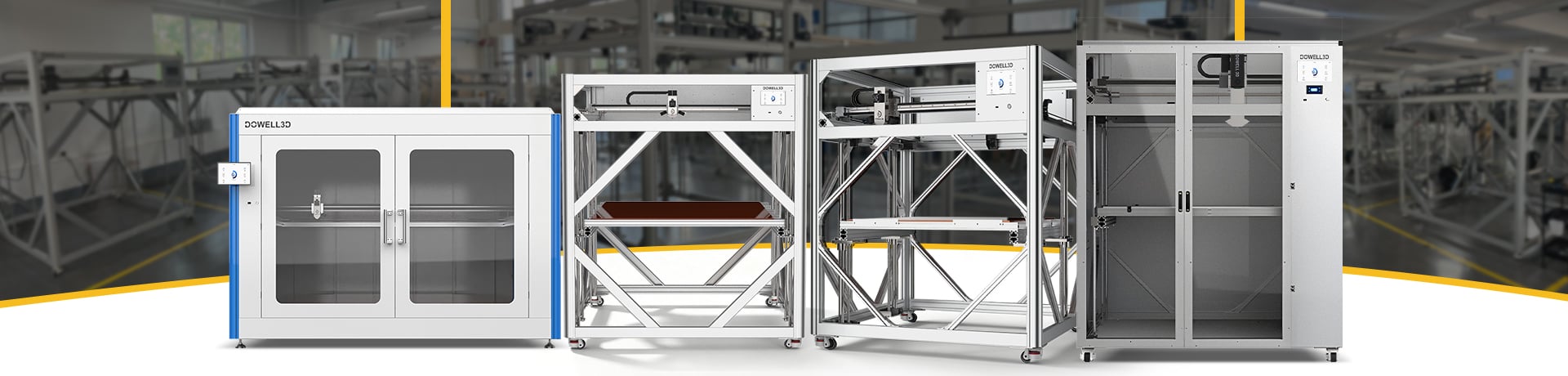
DOWELL3D focuses on large-scale 3D printing solutions that help manufacturers produce larger components with improved stability and precision.
Final Thoughts: How to Achieve Warping-Free 3D Printing
Warping is not caused by a single issue. It is usually the result of temperature changes, poor adhesion, incorrect settings, or unsuitable printing conditions.
By improving temperature control, optimizing first-layer performance, maintaining proper filament conditions, and selecting the right equipment, users can greatly reduce warping problems.
For companies working with large industrial parts, investing in a reliable high precision 3d printer or large format 3d printer can make the difference between repeated failures and consistent production success.