
 EN
EN
 AR
AR
 BG
BG
 HR
HR
 DA
DA
 NL
NL
 FR
FR
 DE
DE
 EL
EL
 HI
HI
 IT
IT
 JA
JA
 KO
KO
 PT
PT
 RU
RU
 ES
ES
 SV
SV
 TL
TL
 ID
ID
 SR
SR
 SK
SK
 UK
UK
 VI
VI
 ET
ET
 HU
HU
 TH
TH
 TR
TR
 MS
MS
 GA
GA
 BE
BE
 HY
HY
 KA
KA
 LO
LO
 LA
LA
 MN
MN
 NE
NE
 SO
SO
 MY
MY
 KK
KK
 UZ
UZ
3D Printing in Automotive: Prototyping to Production
How Large Format 3D Printers Are Changing the Future of Automotive Development
The automotive industry has always been driven by innovation. From electric vehicles and lightweight structures to autonomous driving technologies, manufacturers are constantly looking for faster and more efficient ways to design, test, and produce new components.
Traditional automotive development often requires expensive tooling, long production cycles, and large investments before a single part can be tested. Today, 3D printing technology is changing this process by allowing engineers to move from concept design to physical prototypes much faster.
With the development of advanced industrial 3d printer solutions, automotive companies can now produce large-scale prototypes, functional parts, and even end-use components with improved efficiency and flexibility.
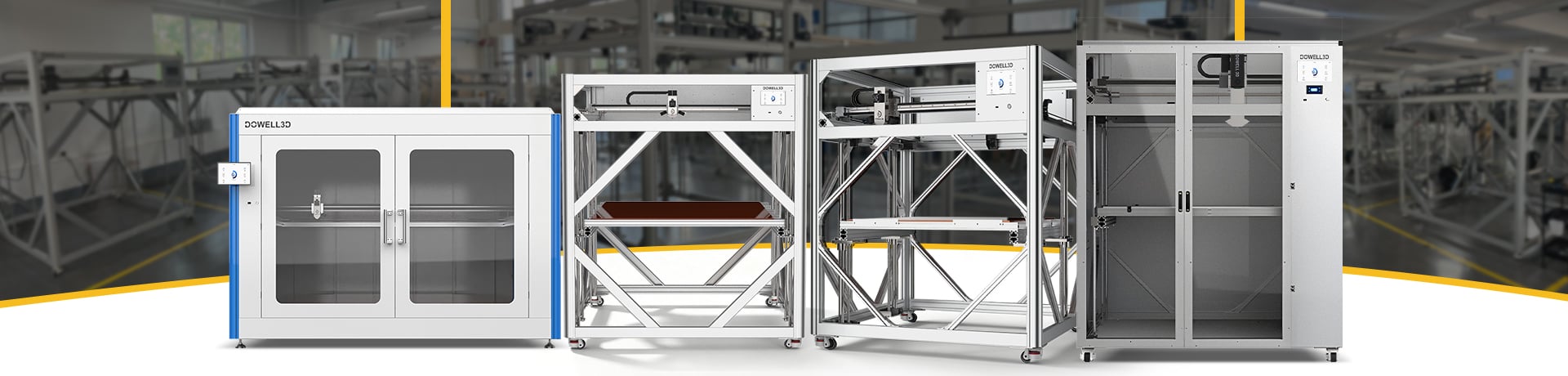
For manufacturers that require bigger build volumes and reliable performance, a large format 3d printer provides new possibilities throughout the automotive production workflow.
Why Automotive Manufacturers Are Turning to 3D Printing
Automotive companies face several challenges during product development:
Reducing prototype costs
Shortening product development cycles
Testing multiple design variations quickly
Producing complex geometries that are difficult with traditional manufacturing
Reducing dependence on expensive molds and tooling
A traditional prototype process may take weeks or even months before engineers can evaluate a physical part. With a modern 3d printer, designers can transform a digital CAD model into a real object within days or even hours.
This faster development cycle allows automotive teams to test more ideas, identify problems earlier, and improve final product quality.
For many engineering departments, 3D printing is no longer only a prototyping tool. It has become an important part of the entire manufacturing strategy.
Automotive Prototyping: The First Step of 3D Printing Applications
Faster Design Validation and Functional Testing
One of the biggest advantages of automotive 3D printing is rapid prototyping.
Engineers can create:
Interior components
Dashboard designs
Air duct prototypes
Vehicle body parts
Assembly fixtures
Testing models
before moving into mass production.
A high precision 3d printer helps automotive teams achieve accurate prototypes that closely match the final design requirements. This allows engineers to check dimensions, assembly performance, and overall functionality before investing in expensive production tooling.
For large automotive components such as bumpers, instrument panels, and exterior body parts, a large format 3d printer offers a major advantage because it can produce bigger models in fewer sections.
Large Format 3D Printing for Automotive Applications
Many automotive parts are simply too large for standard desktop 3D printers. This is where large-scale manufacturing solutions become valuable.
A large format 3d printer is designed for companies that need:
Larger build volume
Reduced part splitting
Stronger prototype structures
Higher production efficiency
Common automotive applications include:
1. Vehicle Exterior Prototypes
Automotive designers often need full-size models to evaluate:
Shape and appearance
Aerodynamics
Component fitting
Design improvements
Large-format printing allows teams to create realistic vehicle parts without waiting for traditional molds.
2. Manufacturing Fixtures and Tools
Automotive factories use custom tools and fixtures to improve production efficiency.
Using an industrial 3d printer, manufacturers can quickly produce:
Assembly guides
Positioning tools
Inspection fixtures
Customized production aids
Compared with traditional machining methods, 3D printing can significantly reduce lead times.
3. Lightweight Automotive Components
The automotive industry is continuously searching for ways to reduce vehicle weight.
3D printing enables engineers to create optimized structures with complex designs that are difficult to manufacture using conventional methods.
This is especially valuable for electric vehicles, where weight reduction directly impacts driving range and performance.
Choosing the Right 3D Printer for Automotive Manufacturing
Selecting the right machine depends on the specific application.
Automotive companies should consider:
Build Size
For small components, a standard 3D printer may be enough. However, for automotive panels, molds, fixtures, and large prototypes, a large format 3d printer provides greater flexibility.
Production Requirements
Companies producing multiple prototypes or functional parts often require an industrial 3d printer that can operate reliably for longer production cycles.
Accuracy Requirements
When producing parts that require precise fitting and testing, a high precision 3d printer becomes essential.
Workflow Efficiency
A good automotive printing solution should help reduce manual work, improve productivity, and support faster design changes.
Why Large Format 3D Printers Are Becoming More Important in Automotive
The future of automotive manufacturing is moving toward:
Faster innovation
More customized products
Shorter production cycles
Flexible manufacturing
Large-format 3D printing supports these trends by giving manufacturers the ability to produce larger parts, prototypes, and tools without relying heavily on traditional manufacturing processes.
Companies looking for a reliable solution often consider manufacturers like Dowell 3D because professional large-format printing equipment can help automotive teams handle demanding applications with greater efficiency.
Whether for prototype development, functional testing, or small-volume production, a properly selected 3d printer can become a valuable part of the automotive manufacturing workflow.
Conclusion
3D printing is transforming the automotive industry from the early design stage to real production applications.
The combination of advanced industrial 3d printer technology, large build capabilities, and precision engineering allows manufacturers to create better products faster while reducing development costs.
As automotive innovation continues to accelerate, large format 3d printer solutions will play an increasingly important role in helping companies move from ideas to reality.
For automotive manufacturers searching for faster prototyping and flexible production solutions, investing in professional 3D printing technology can provide a significant competitive advantage.