 EN
EN
 AR
AR
 BG
BG
 HR
HR
 DA
DA
 NL
NL
 FR
FR
 DE
DE
 EL
EL
 HI
HI
 IT
IT
 JA
JA
 KO
KO
 PT
PT
 RU
RU
 ES
ES
 SV
SV
 TL
TL
 ID
ID
 SR
SR
 SK
SK
 UK
UK
 VI
VI
 ET
ET
 HU
HU
 TH
TH
 TR
TR
 MS
MS
 GA
GA
 BE
BE
 HY
HY
 KA
KA
 LO
LO
 LA
LA
 MN
MN
 NE
NE
 SO
SO
 MY
MY
 KK
KK
 UZ
UZ
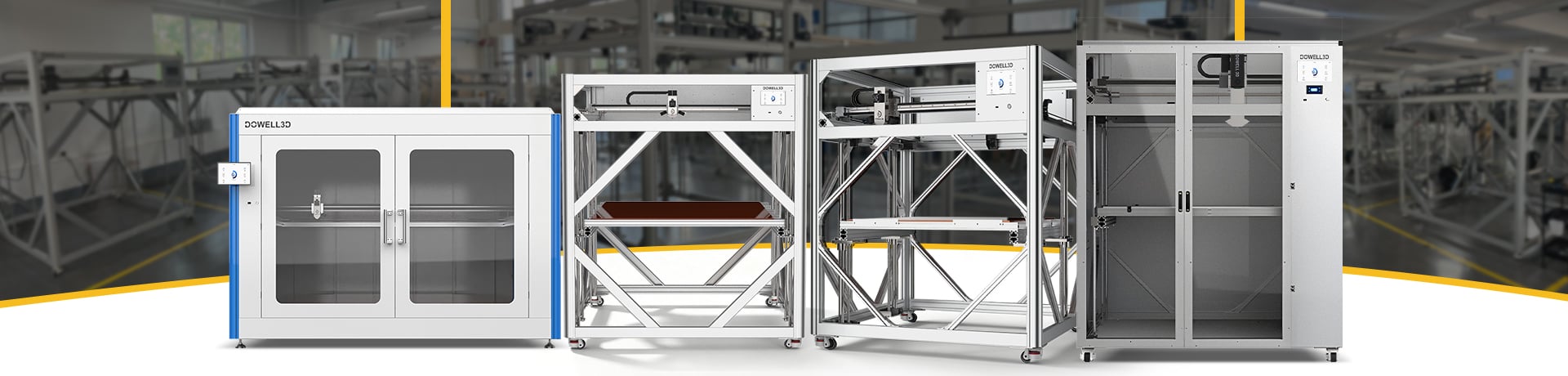
Enclosed vs Open Large Format 3D Printer
Choosing Between Enclosed and Open Large Format 3D Printers
When purchasing a 3d printer for professional use, one of the most important decisions is choosing between an enclosed and an open design.
For small desktop machines, this choice may not have a major impact. However, when it comes to a large-format 3D printer, the printer structure can directly affect print quality, material performance, operating environment, and production efficiency.
Businesses using 3D printing for prototypes, industrial parts, and customized manufacturing need to consider more than just build size. Factors such as temperature control, accessibility, maintenance, and application requirements all influence the final decision.
So, what is the difference between an enclosed and an open large 3D printer? Which option is better for industrial production?
Let’s compare both designs and help you choose the right solution.
What is an enclosed large-format 3D printer?
An enclosed large-format 3D printer features a fully enclosed build chamber that surrounds the printing area.
This enclosed design helps create a more stable printing environment, thereby minimizing the impact of external factors such as temperature fluctuations and air currents.
Key features include:
An enclosed build chamber
Superior environmental control
Reduced external interference
More stable long-term printing conditions
For businesses producing large functional parts, enclosed industrial-grade 3D printers offer greater consistency—particularly when printing complex models that require stable environmental conditions.
What is an open large-format 3D printer?
An open large-format 3D printer does not have a fully enclosed chamber around the printing area.
The open design provides easier access to the build platform and allows operators to monitor the printing process directly.
Main advantages include:
Easier operation access
Faster model removal
Better visibility during printing
More convenient maintenance
Open designs are commonly preferred for applications where flexibility, accessibility, and easy operation are priorities.
Enclosed vs Open Large Format 3D Printer: Key Differences
1. Temperature Stability
Temperature control is one of the biggest differences between enclosed and open printers.
During large-scale printing, environmental changes can affect the final result.
An enclosed large-format 3D printer helps maintain a more consistent internal environment, reducing the impact of:
Room temperature changes
Air movement
Uneven cooling
This can improve printing stability, especially for larger parts.
Open printers allow more airflow, which can be useful for certain applications but may require a more controlled workspace.
Best Choice:
For applications requiring consistent environmental conditions, an enclosed design may provide an advantage.
2. Print Quality and Accuracy
Accuracy is a major concern for industrial users.
A high-precision 3D printer needs to maintain stable movement and consistent printing conditions throughout the entire process.
An enclosed printer can help improve:
Layer consistency
Surface quality
Dimensional stability
However, print accuracy also depends on:
Mechanical design
Calibration
Motion system
Printing settings
A well-designed, open, large-format machine can still achieve excellent results when properly optimized.
Best Choice:
For demanding engineering applications, enclosed systems often provide additional stability.
3. Material Compatibility
Different printing materials respond differently to environmental conditions.
Some applications require better temperature management to reduce issues such as:
Warping
Layer separation
Uneven cooling
An enclosed industrial 3D printer can provide a more controlled environment, which may improve reliability when working with advanced materials.
For general-purpose projects and standard applications, an open design may offer enough performance.
The right choice depends on your production requirements.
4. Ease of Operation and Maintenance
Open and enclosed printers provide different user experiences.
Open Large Format 3D Printer
Advantages:
Easy access to the printing area
Convenient maintenance
Simple monitoring
Faster part removal
Enclosed Large Format 3D Printer
Advantages:
Protected printing environment
Reduced external interference
Better process control
For businesses that frequently change models or need quick access, an open design may be more convenient.
For companies focusing on repeatable industrial production, an enclosed design may offer better process control.
5. Space Requirements and Workplace Integration
The working environment also matters.
An open large-format 3D printer usually has a simpler structure and may require less preparation before operation.
An enclosed model may require more installation space but provides a more controlled production environment.
Before purchasing, consider:
Available workspace
Production conditions
Operator workflow
Safety requirements
The best printer is the one that fits naturally into your production process.
6. Noise and Workplace Comfort
In professional environments, noise can become an important consideration.
The enclosure of a large industrial printer can help reduce operational noise and keep the workspace more comfortable.
For companies operating multiple machines or running long printing cycles, this can improve the overall working environment.
Which One Is Better for Industrial Production?
There is no single answer because different industries have different requirements.
An enclosed industrial 3D printer may be better for:
Long production runs
Large functional parts
Applications requiring stability
Projects sensitive to environmental changes
An open large-format 3D printer may be better for:
Rapid prototyping
Frequent model changes
Easy maintenance access
Flexible production workflows
The key is selecting a printer based on your actual application rather than choosing based only on appearance or price.
Conclusion
Choosing between an enclosed and open large-format 3D printer depends on your production needs, environment, and application goals.
Enclosed machines provide better temperature stability and process control, while open machines offer flexibility and easier operation.
For businesses producing large prototypes, functional parts, or industrial components, selecting the right printer design can improve efficiency, accuracy, and long-term value.
Whether you choose an enclosed or open solution, the most important factors are a reliable machine structure, stable performance, and the ability to meet your future manufacturing needs.