
 EN
EN
 AR
AR
 BG
BG
 HR
HR
 DA
DA
 NL
NL
 FR
FR
 DE
DE
 EL
EL
 HI
HI
 IT
IT
 JA
JA
 KO
KO
 PT
PT
 RU
RU
 ES
ES
 SV
SV
 TL
TL
 ID
ID
 SR
SR
 SK
SK
 UK
UK
 VI
VI
 ET
ET
 HU
HU
 TH
TH
 TR
TR
 MS
MS
 GA
GA
 BE
BE
 HY
HY
 KA
KA
 LO
LO
 LA
LA
 MN
MN
 NE
NE
 SO
SO
 MY
MY
 KK
KK
 UZ
UZ
First Layer Perfection: How to Fix Bed Adhesion Issues
Why the First Layer Determines Printing Success
The first layer is the foundation of every successful 3D print. Whether you are using a desktop machine or an industrial 3d printer, poor first-layer adhesion can lead to failed prints, wasted production time, and inconsistent results.
Many users focus on printing speed, resolution, or machine size, but the quality of the first layer often determines the final outcome. A strong first layer helps prevent problems such as warping, layer separation, and part movement during printing.
For manufacturers using a large format 3D printer to produce large prototypes, functional components, or industrial parts, reliable bed adhesion becomes even more important because larger prints require longer operating times and greater stability.
What Is 3D Printer Bed Adhesion?
Bed adhesion refers to how well the first layer of a printed part attaches to the build platform.
A successful first layer should:
Stick firmly to the printing surface
Maintain consistent thickness
Create a stable foundation for upper layers
Remain flat throughout the printing process
When adhesion fails, common problems include:
Corners lifting from the build surface
The entire print moving during operation
Uneven first layers
Failed large-scale prints
For a big 3d printer, these issues can become more serious because larger parts create more stress during the printing process.
Why First Layer Problems Happen
Bed adhesion issues usually come from a combination of mechanical, environmental, and setup factors.
Understanding the cause is the first step toward solving the problem.
1. Incorrect Bed Leveling
One of the most common causes of poor first-layer adhesion is an uneven build platform.
If the nozzle is too far from the surface:
The first layer may not stick properly
Lines may appear separated
The printed part may move during printing
If the nozzle is too close:
Material flow may become restricted
The first layer may become too thin
Surface damage may occur
Proper leveling allows the nozzle to maintain the correct distance across the entire printing area.
This is especially important for a large format 3D printer, where even a small leveling error can affect a large build surface.
2. Dirty or Improperly Prepared Printing Surface
The condition of the build platform directly affects adhesion.
Dust, oil, fingerprints, or leftover material can prevent the first layer from bonding properly.
Before starting a print, manufacturers should check:
Surface cleanliness
Platform condition
Proper preparation procedures
For production environments using an industrial 3d printer, regular maintenance of the printing surface helps maintain consistent results.
3. Incorrect Printing Temperature Settings
Temperature plays an important role in first-layer performance.
If the temperature settings are not suitable, the first layer may not bond correctly with the surface.
Common symptoms include:
Weak adhesion
Uneven edges
Layer separation
Finding the correct balance helps create a stable foundation for the entire print.
For large industrial applications, temperature stability becomes increasingly important because large parts require longer printing periods.
4. Printing Speed During the First Layer
The first layer usually requires more attention than the rest of the print.
Printing too quickly can prevent proper adhesion because the machine does not allow enough time for the first layer to form correctly.
A slower first-layer speed can improve:
Surface contact
Layer consistency
Overall print reliability
Many professional users adjust first-layer settings when operating a 3d printer for larger or more complex parts.
5. Environmental Conditions
The surrounding environment can also affect first-layer performance.
Factors such as:
Temperature changes
Air movement
Workspace conditions
may influence how the first layer forms.
For a large 3D printer used in industrial production, maintaining a stable printing environment can reduce unexpected failures.
How to Improve First Layer Adhesion Step by Step
Step 1: Check the Build Platform
Before printing:
Clean the surface
Confirm platform condition
Remove leftover material
A clean and stable surface provides a better foundation.
Step 2: Adjust the First Layer Height
The first layer should have enough contact with the build platform while maintaining smooth extrusion.
Incorrect height settings are one of the fastest ways to create adhesion problems.
Step 3: Optimize First Layer Settings
Adjusting printing parameters can significantly improve reliability.
Important settings include:
First layer speed
Layer height
Printing temperature
Cooling settings
Testing different combinations helps achieve the best result for each application.
Step 4: Maintain Machine Stability
Mechanical stability affects every stage of printing, including the first layer.
A well-designed industrial 3d printer with a strong structure provides better consistency during long production jobs.
For businesses producing large components, equipment stability is especially important because failed prints can result in significant time and material losses.
Why First Layer Quality Matters More for Large Format 3D Printing
A small print failure may only waste a few hours. However, a failed large-scale print can consume much more time and resources.
Large industrial parts often require:
Extended printing periods
Higher dimensional accuracy
Reliable layer bonding
Consistent production performance
This is why manufacturers choosing a large format 3D printer should consider not only build size but also machine stability, calibration features, and overall reliability.
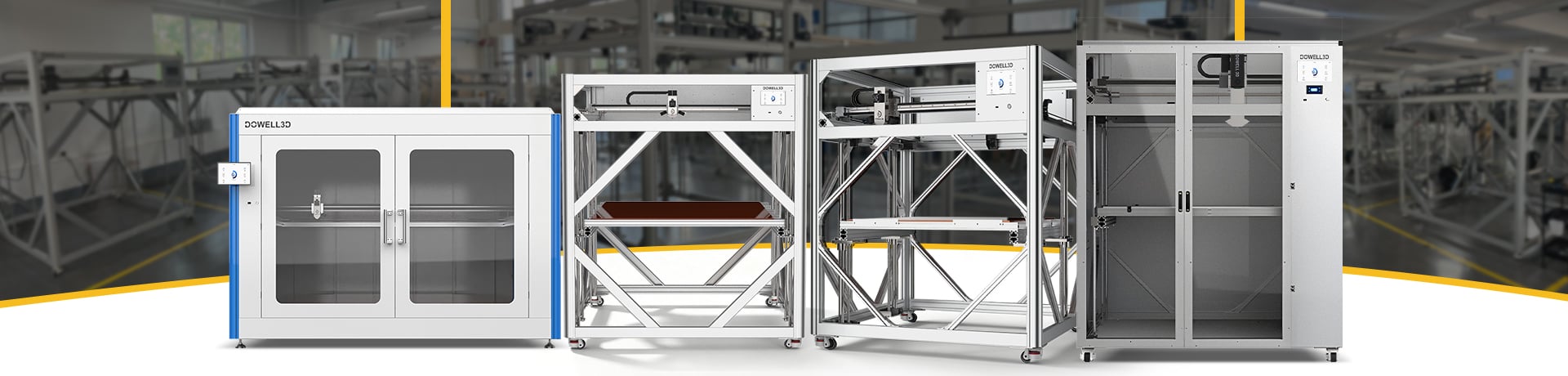
DOWELL3D focuses on providing large-format printing solutions designed for industrial users who need stable performance for demanding applications.
Choosing the Right 3D Printer for Reliable First Layers
When selecting a professional machine, businesses should consider:
Build Platform Design
A stable and well-designed platform improves first-layer consistency.
Machine Structure
A rigid frame helps maintain accurate movement during printing.
Long-Term Reliability
Industrial production requires equipment that can deliver repeatable results over time.
Application Requirements
The best printer depends on the size, complexity, and purpose of the parts being produced.
A properly engineered big 3d printer can provide the stability needed for large-scale manufacturing applications.
Conclusion: A Perfect First Layer Starts With the Right Foundation
First-layer adhesion is one of the most important factors affecting 3D printing success. From platform leveling to machine stability, every detail contributes to print quality.
For users operating a 3d printer, solving first-layer problems means fewer failed prints and more consistent production.
For industrial manufacturers using a large format 3D printer, reliable first-layer performance is essential for producing large, accurate, and functional parts.
A successful print always starts from the first layer.